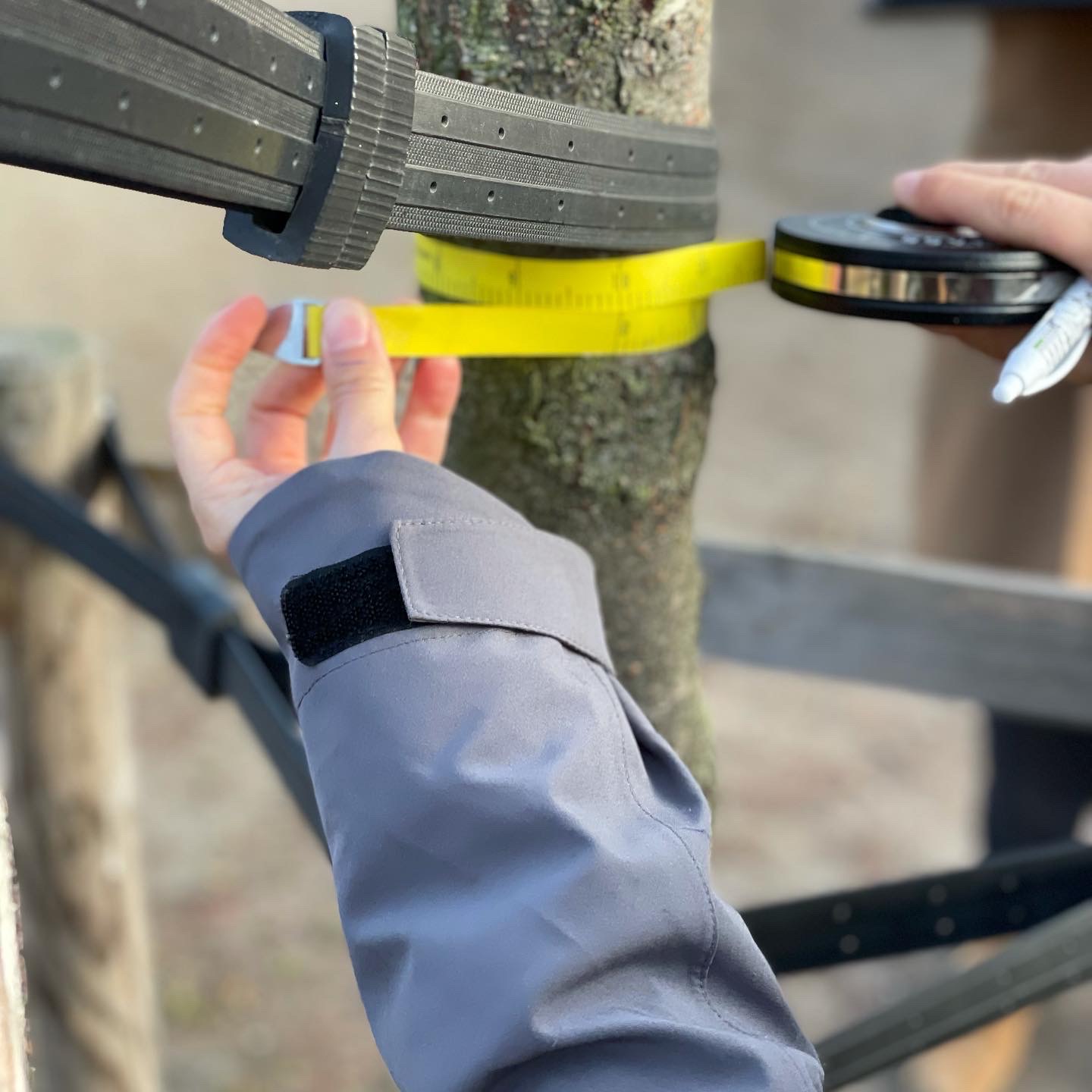
Risk tree is a term that many people use if they are worried about a suspected falling tree. But for a tree to be considered a risk tree, three different factors are required:
- There must be a target, such as a person or a car, that could be injured near the tree.
the tree. - The tree must have some kind of damage or weakness, such as dead branches or a severe rottenness.
- The consequences of the target being hit by the tree part must be significant.
Services
We can carry out risk assessments based on TRAQ -Tree Risk Assessment Qualification, which is a tree risk assessment system. It was developed by the International Society of Arboriculture and is an internationally recognized method. This method is also advocated by the county administrative boards.
In consultation with you, we choose the level of assessment we will perform. We can do visual assessments but also have the possibility to do deeper analysis using tools like the PiCUS Sonic Tomograph.
Our consultants work completely independently, which means they have no financial interest in preserving or removing the tree.
PiCUS Sonic Tomograph examination
To get an idea of whether there are cavities and/or decay in trees, there are several methods that can be used. We use a so-called PiCUS Sonic Tomograph for the examination of the trees. This survey method does not cause any damage to the trees but uses sound waves to detect the presence of cavities or decay. The method provides a two-dimensional image of the entire surveyed slice of the tree, which gives a good idea of the extent of any cavities or decay.