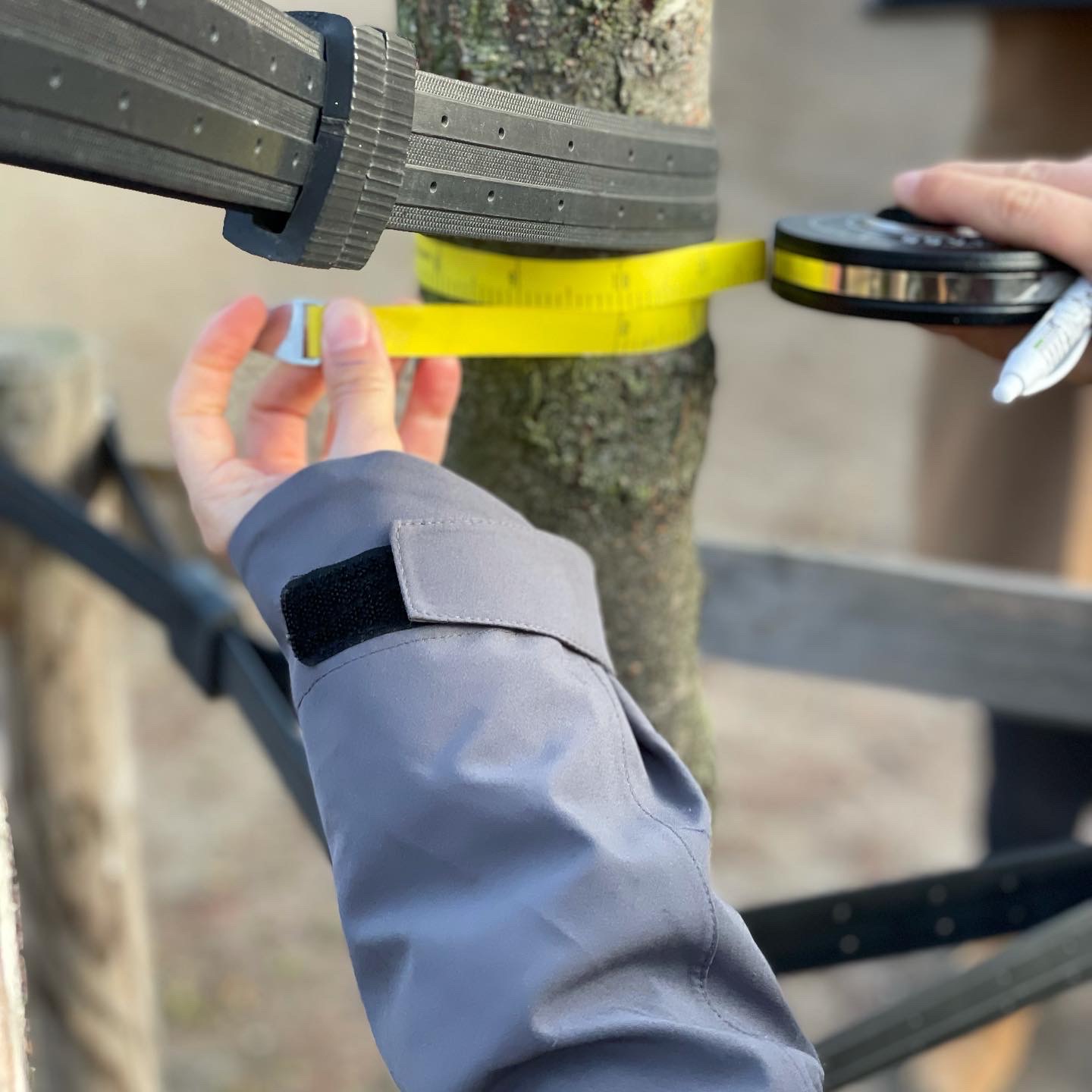
Trees contribute several positive values for people, the environment and the climate in the city. Tree inventories provide a good basis for developing work on tree plans and tree care plans and are therefore an important tool in developing a sustainable city.
Services
We have extensive experience in all stages of a tree inventory, from planning, execution and use.
We use the Standard for tree inventory in urban environment Version 3.0, and adapt the parameters to be included in consultation with you according to your needs and the purpose of the inventory.
- We can also help you expand the inventory by:
- Calculate the ecosystem services of the area using i-Tree Eco
- Calculate canopy cover using i-Tree Canopy
- Provide suggestions for Plantable spots and design proposals
Arguments for conducting a tree inventory
- 3-30-300 - By making it possible for everyone to see three trees from their school or workplace, for city blocks to have at least 30% canopy coverage and for the nearest park to be at least 300 m away, we can contribute to a better urban environment. Following 3-30-300 is an important political issue in many cities and has also received media attention. All tree populations in a city are an important part of achieving the 3-30-300 rule, but without a tree inventory we don't know where important trees are, or where trees are missing.
- 2030 Agenda - Many cities are committed to achieving net zero emissions by 2030 and trees act as carbon sinks by sequestering carbon dioxide. Through an inventory, we can calculate how much carbon dioxide the tree population stores each year.
- Children's rights - According to the UN Convention on the Rights of the Child, all children under the age of 18 have the right to a good environment in which to grow up. Research shows that the physical environment is of great importance for children's development and how the environment can promote the health, development and learning of children and young people in several ways. It is therefore important to develop good outdoor environments that contribute to the well-being of children and young people. Trees are an important component of the outdoor environment and in order to manage and develop the tree population, a tree inventory is required.
- Conservation of rare or endangered tree species - An inventory can detect and identify trees with high biological values. This can contribute to the conservation of biodiversity and ecosystem integrity.
- Legal protection - A tree inventory identifies trees with legal protection, which facilitates planning and management of the tree population and reduces the likelihood of managers breaking the law.
- Noise reduction - Trees act as natural sound barriers and can reduce perceived noise from traffic and other sound sources. By inventorying the trees, we can place them strategically to reduce noise disturbance for schools and kindergartens.
- Stormwater - Trees can have a major impact on stormwater management, directly through the rainwater trapped in their crowns, trunks and branches, but also through their consumption of water in the soil, which reduces the risk of soil saturation during prolonged rainfall.
- Operational maintenance - In order to plan and maintain the tree population and its ecosystem services, we need to know the number, variety and size of trees. An inventory is at the heart of this work.
- Ecological learning - The tree inventory can serve as an opportunity for children and staff to learn about tree ecology, life cycles and plants. It promotes understanding of the complexity of nature and the importance of ecosystems. This information can then be used to develop educational tools such as tree signs.
- Economic benefits - Trees can have positive economic effects by increasing property values, reducing energy costs, attracting citizens to settle in the area and attracting visitors to areas. Having an inventory of trees allows you to take advantage of these economic benefits and make informed management and planning decisions.
- Learning - Research clearly shows that trees and green spaces increase the learning capacity of children and young people. Through a tree inventory, it is possible to map where trees exist and where the tree population needs to be supplemented.
- Energy use - Trees can be used to shade buildings and save energy. Through an inventory, we can get a better idea of whether the size of the trees is suitable to contribute to energy savings through proper placement.
- Aesthetic value - Trees help to create a beautiful and pleasant environment for schools and kindergartens. An inventory can identify which trees need to be preserved or planted to improve the look and feel of the area.
- The green factor - The size of trees affects their ability to generate ecosystem services and is an important part of, for example, the calculation of the green factor. An inventory provides an opportunity to create a good picture of the contribution of trees.
- Sustainable material use - By inventorying trees, it is possible to identify potential resource regeneration areas. Trees that need to be removed due to disease or damage can be used for wood material, such as timber or wood chips, for various purposes within the school or kindergarten, thus promoting sustainable material use.
- Sustainability goals - By conducting a tree inventory, schools and kindergartens can contribute to achieving sustainability goals at local, national and global level. This includes goals on biodiversity, climate change and sustainable land use.
- Climate adaptation - With increasing climate change, it is important to adapt schools and kindergartens to cope with extreme weather conditions. Trees can help reduce flooding, erosion and other climate-related problems. Through an inventory, trees can be planned for and integrated into climate adaptation strategies.
- Climate resilience - Trees can act as a buffer against extreme weather conditions, such as strong winds and storms. An inventory can identify areas that can benefit from trees that protect against climate-related risks and create a more resilient environment.
- Cultural and historical value - Some trees may have cultural or historical significance to the school or nursery and its surroundings. An inventory can identify and preserve these trees as part of the cultural and historical heritage.
- Humidity and air conditioning - Trees can help to increase humidity through transpiration, which can be beneficial in times of drought. An inventory can identify trees that can help create a more comfortable and healthy air environment for children and staff.
- Air quality - Trees play an important role in improving air quality by capturing pollutants and producing oxygen. An inventory helps to identify areas with a lack of trees and where air quality can be improved.
- Mental health and well-being - Research shows that green environments, including trees, have positive effects on mental health and well-being. By taking an inventory, you can plan to create green spaces that promote relaxation, recovery and well-being for both children and adults in your school or kindergarten.
- Environmental education - Trees can serve as excellent tools for environmental education. By inventorying trees and integrating knowledge of their ecosystem, biology and ecology, schools and kindergartens can provide meaningful educational experiences that promote understanding and responsibility towards nature and the environment.
- Human health, recreation and well-being. The inventory allows us to target our efforts to plant trees in places where they are needed, and to select appropriate tree species to promote human health.
- Community engagement - A tree inventory can involve local people, school children, parents and staff in a joint effort to preserve and improve the green environment. It can create a sense of community and pride in the natural heritage of the school or nursery.
- Pest management - Some tree species can host pests that can spread to adjacent tree stands. An inventory can identify pest infestations in time and take appropriate measures to protect trees and prevent the spread of pests.
- Pest control - Some tree species can be susceptible to pests and diseases. An inventory can detect pests at an early stage and take appropriate measures to protect the trees and prevent their spread to other areas.
- Shading of outdoor areas - Trees provide natural shade, which is particularly important for outdoor areas of schools and kindergartens where children and staff spend time. An inventory can help plan for the placement of trees that provide optimal shade at different times of the day, helping to create comfortable and safe outdoor environments.
- Social context - Trees can serve as gathering places and promote social interaction and community. An inventory helps to identify places with trees that can be used for outdoor activities, meeting places and events for the school or kindergarten community.
- Attractiveness of the urban environment - Trees play an important role in improving the attractiveness and appeal of the urban environment. An inventory helps to identify areas where there is a lack of trees and where the planting and preservation of trees can improve the aesthetics and attract more people to stay and enjoy the surroundings of the school or kindergarten.
- Support for pollinators - Trees play an important role in the pollination of plants and thus promote biodiversity. An inventory can identify trees that are particularly attractive to pollinators and take measures to protect and promote these tree species.
- Safety - A tree inventory helps to identify trees that may be in poor condition or pose a safety risk to school children and staff. This allows measures to be taken to prevent accidents and maintain a safe working environment.
- Sustainability education - Through a tree inventory, schools and kindergartens can integrate sustainability education and teach children about the importance of preserving trees, ecosystem services and natural resources. This promotes awareness of sustainability and can inspire action for a more sustainable future.
- Outdoor activities and play - Trees help create a natural and stimulating environment for outdoor activities and play in schools and kindergartens. An inventory can identify suitable locations for play equipment and create green spaces that promote the physical and mental well-being of children.
- Heat island effect - Reduce the heat island effect and directly cool buildings and patios through shade and transpiration from the trees.